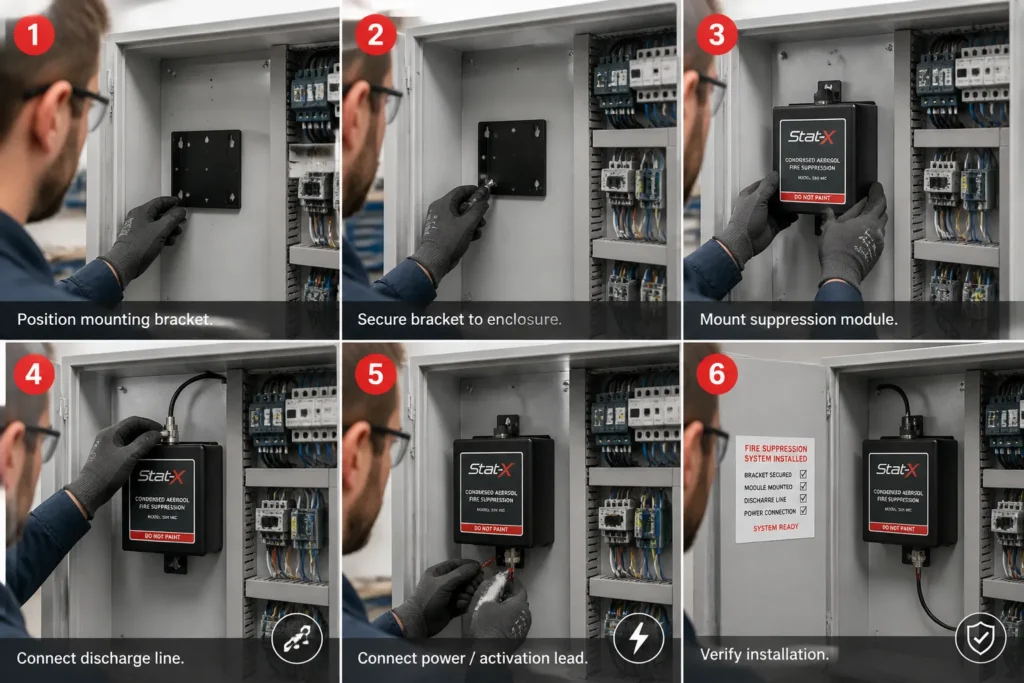
The installation process for our AF-X Fireblocker automatic fire suppression system is uniquely straightforward and efficient, designed to be plug-and-play without requiring complex structural changes, piping, or pressure vessels. We focus on simplicity and speed, ensuring your critical assets are protected with minimal disruption to your operations. This approach makes our innovative aerosol technology ideal for both new builds and retrofitting into existing infrastructure. Read the overview article about Which company supplies an automatic fire suppression system?
How is an AF-X Fireblocker automatic fire suppression system installed?
Our AF-X Fireblocker system is installed by certified professionals through a streamlined process that involves assessment, strategic placement of compact aerosol generators, and simple electrical connection. Unlike traditional systems, our installation avoids the need for any piping, water storage, or pressurized cylinders, which dramatically reduces complexity, cost, and installation time. The core of our system is its plug-and-play design, which allows for rapid deployment in sensitive and hard-to-reach areas.
What are the main steps in the installation process?
The installation follows a clear, efficient path to ensure maximum effectiveness. The primary steps are:
- Site Assessment: Our certified partner evaluates the space, identifies the primary fire risks (such as electrical cabinets or servers), and calculates the required amount of aerosol extinguishing agent.
- Mounting the Generators: The compact and lightweight AF-X Fireblocker aerosol generators are mounted directly inside or near the identified risk area. This requires no major structural work.
- Connecting Detection Systems: The generators are connected to a detection system, such as a linear heat detection cable or smoke detectors. This is a simple electrical connection, typically using a two-wire cable.
- Commissioning and Testing: Once installed, the entire system is tested by the certified installer to ensure it is fully operational and ready to activate automatically in the event of a fire.
Can I install the fire suppression system myself?
No, self-installation by an end-user is not permitted. While our system is designed for simplicity, it must be installed by one of our certified distributors or a qualified electrical installation engineer (E-Installer) who has completed our training. This ensures the system is deployed correctly according to safety standards and our specifications, guaranteeing its performance and activating its warranty. This professional-only installation ensures compliance and gives you complete peace of mind.
What preparation is needed before installing an automatic fire suppression system?
Minimal to no site preparation is required before installing an AF-X Fireblocker system, which is one of its greatest advantages. Our technology was specifically engineered to eliminate the extensive and costly preparations associated with traditional water, gas, or chemical systems. You can protect your assets without undertaking a major construction project. This makes our system ideal for retrofitting into existing, operational environments like IT server rooms, industrial control panels, and marine engine rooms.
The key benefit is what you don’t need to do. There is no requirement to build a separate, reinforced room for heavy gas cylinders, install a network of pipes, or arrange for water storage tanks and high-pressure pumps. Our system is compact, pressureless, and self-contained, allowing it to be placed directly where it’s needed. The only prerequisite is ensuring physical access to the installation points for our certified technicians.
What tools and equipment are needed for installation?
Installation of an AF-X Fireblocker system requires only standard electrical tools. Because the system is electrically activated and doesn’t use pipes or pressure, no specialized plumbing, welding, or heavy-lifting equipment is necessary. Our certified installers can complete the work efficiently using the tools they would for any standard electrical installation, further contributing to a fast and non-disruptive process.
What best practices ensure the effectiveness of an automatic fire suppression system?
The most critical best practice for ensuring the effectiveness of our AF-X Fireblocker system is strategic placement for source-level protection, combined with routine visual maintenance. By positioning our compact generators directly inside high-risk enclosures like electrical cabinets or next to engines, we can extinguish a fire the moment it starts. This approach prevents the fire from spreading, dramatically minimizing both fire and extinguishing damage compared to room-flooding systems that activate only after a fire has grown.
How do you optimize the placement of the fire suppression units?
We optimize placement by installing the AF-X Fireblocker units as close as possible to potential ignition sources. The solid aerosol’s unique properties allow us to manufacture generators in various sizes, making them perfect for confined spaces like control cabinets, battery storage units, and distribution boxes. This targeted ‘source protection’ is far more efficient and effective than waiting for a fire to fill a room with smoke or heat before activation.
What common installation mistakes should be avoided?
A common mistake to avoid is failing to ensure the protected enclosure is adequately sealed. Our aerosol agent needs to remain suspended in the space for a certified hold time of at least 60 minutes to prevent the fire from re-igniting. Excessive ventilation or large, unsealed gaps can compromise this concentration. Our certified installers are trained to assess and address this, ensuring the enclosure can maintain the protective atmosphere after discharge.
How often should the system be checked?
Our systems are designed for a 15-year operational lifespan with very low maintenance requirements. Best practice includes regular visual inspections to ensure the units are unobstructed and undamaged. Beyond that, periodic system tests and checks of the activator should be conducted by a certified technician according to our maintenance protocols. This simple schedule ensures reliability without the high ongoing costs of traditional systems.
Conclusion
The installation of an AF-X Fireblocker automatic fire suppression system is defined by its simplicity, speed, and cost-effectiveness. By eliminating the need for pipes, pressure vessels, and structural modifications, we provide a plug-and-play solution that offers superior fire protection without the complexity. This modern approach ensures your critical operations and valuable assets are safeguarded with minimal disruption and a low total cost of ownership. Contact us to connect with a certified partner who can secure your facility quickly and efficiently.