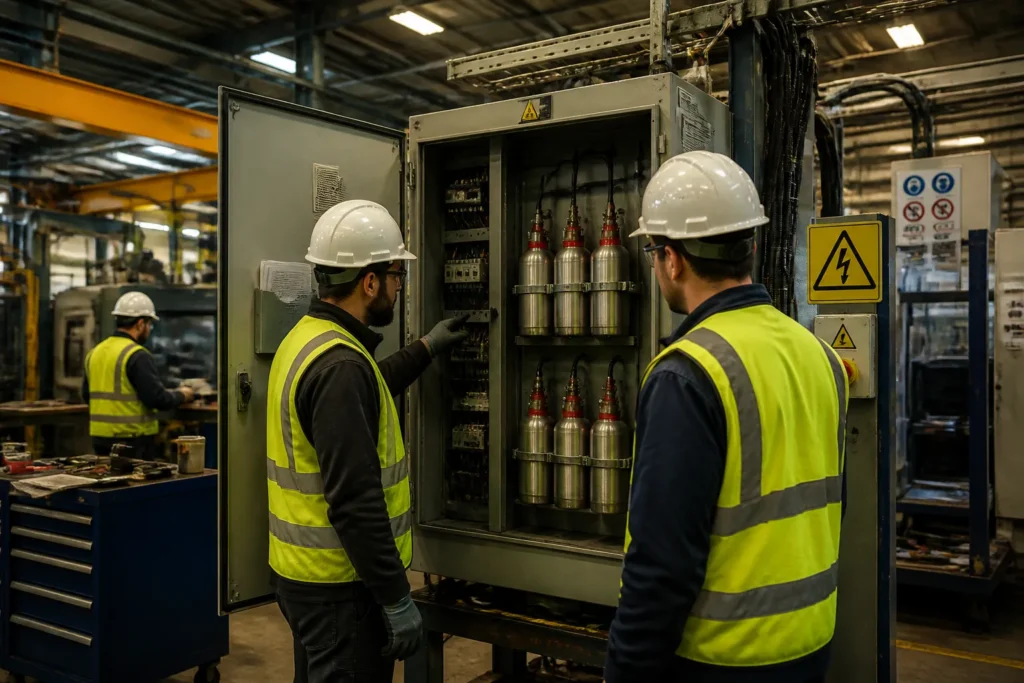
Your business should invest in a professional fire prevention system when the continuous operation of critical assets, such as technical rooms, server rooms, or essential machinery, is vital to your success. Protecting these high-risk areas is not just about meeting regulations; it’s a fundamental strategy to ensure business continuity, safeguard valuable equipment, and protect your personnel. An advanced system prevents a minor incident from escalating into a catastrophic failure. Read the overview article about who can help me with fire prevention for my business?
In which situations is professional fire prevention essential for a business?
Professional fire prevention is essential in any situation where a fire could halt operations, destroy critical infrastructure, or endanger lives, particularly in environments with a high concentration of electrical equipment or irreplaceable assets. These scenarios are common across many industries, from manufacturing plants to data centers, where even a small fire can have devastating consequences for the entire business.
Why do companies invest in fire prevention?
Companies invest in fire prevention primarily to guarantee business continuity. Critical areas like Motor Control Centers (MCCs), IT server rooms, and industrial control panels are the nerve centers of an operation. A fire in one of these locations can bring the entire company to a standstill, leading to significant financial losses. Investment is also driven by the need to protect expensive, hard-to-replace equipment and, most importantly, to ensure the safety of employees.
What problems does modern fire prevention solve?
Modern fire prevention, like our aerosol technology, solves several critical problems that traditional systems cannot. It eliminates the risk of catastrophic downtime by suppressing fires at the source before they can spread. Furthermore, it prevents the extensive collateral damage often caused by water sprinklers or foam systems. Our dry aerosol is harmless to sensitive electronics, meaning that after an incident, your equipment remains functional, and operations can resume swiftly. It also addresses environmental concerns, with zero impact on the ozone layer or global warming potential.
What are the tangible results of effective fire prevention?
The most significant result is minimized disruption and damage. With an effective system like the AF-X Fireblocker, a fire is extinguished in seconds at its origin. This means the damage is confined to the faulty component, not the entire room or facility. Other results include a safer work environment, enhanced peace of mind, and long-term financial savings due to a low Total Cost of Ownership (TCO), a 15-year lifespan, and minimal maintenance requirements.
How do real-world examples help me choose the right fire prevention?
Understanding real-world examples from other companies provides a clear and practical benchmark for identifying similar risks and effective solutions within your own operations. Seeing how others have successfully protected their assets moves the conversation from theoretical risk to a tangible, solvable problem. It allows you to learn from their experiences and make a more informed decision for your own business.
What can I learn from the experiences of other businesses?
By looking at other businesses, you can learn to identify your own most vulnerable points. For example, a manufacturing plant that installed an industrial fire suppression system in its main electrical cabinets did so because it recognized that a short circuit there could halt all production. This teaches you to think about source protection—tackling the fire where it’s most likely to start. Likewise, a data center’s choice of a waterless system underscores the importance of protecting sensitive electronics from extinguishing damage, a lesson directly applicable if you rely on IT infrastructure.
Why is it important to know when fire prevention is most useful?
Knowing when fire prevention is most useful helps you prioritize your investment and achieve the highest return on safety. This context turns a general expense into a strategic decision. Instead of a blanket approach, you can focus on the areas where the impact of a fire would be most severe. This targeted strategy is more cost-effective and provides superior protection where it matters most, ensuring your resources are used wisely to protect the core functions of your business.
How can I determine the right fire prevention approach for my specific business?
You can determine the right fire prevention approach by conducting a simple but critical risk assessment: identify the absolute essential hubs of your operation and evaluate the financial and logistical impact if they were to fail due to a fire. The greater the impact, the more advanced your fire prevention strategy needs to be. This moves the decision from a generic safety measure to a tailored business continuity plan.
Does advanced fire prevention fit my current situation?
To assess the fit, look at your company’s key assets. Do you operate any of the following?
- Technical Rooms or IT & Server Rooms: These house the brains of your operation.
- Electrical Cabinets: High concentrations of electricity make these a common fire source.
- Industrial Machinery: Essential for production and often irreplaceable.
- Lithium-ion Battery Storage: A modern and significant fire risk.
If your business relies on any of these, an advanced, targeted system is a perfect fit. Our applications page details how we protect these exact high-value environments across various sectors, from marine to wind turbines.
How do I decide if this is the right choice for my company?
The decision becomes clear when you weigh the costs against the risks. Consider the potential cost of downtime, lost data, equipment replacement, and reputational damage. Compare that to the Total Cost of Ownership (TCO) of our AF-X Fireblocker system. With a 15-year lifespan, minimal maintenance, and a simple, plug-and-play installation that requires no costly structural changes like piping or separate cylinder rooms, our system is a financially sound choice. It offers superior protection without the complexity and expense of traditional systems.
Conclusion
Choosing the right fire prevention is a strategic business decision, not just a compliance task. By understanding the specific situations where a fire would be most damaging—in your critical technical rooms, electrical cabinets, or server rooms—you can appreciate the clear value of a modern, targeted solution. We designed the AF-X Fireblocker system to provide effective, damage-free, and cost-efficient protection for your most vital assets. Investing in our technology is an investment in your company’s resilience and long-term continuity.